
Practical financial information designed to help you understand the topic clearly.
Learn to understand your bank statement and identify unfamiliar charges.
Have you ever checked your bank balance and wondered where some of your money went? A bank statement can help you find the answer.
Your bank statement records money coming into your account, money going out, and fees charged by your bank. Learning to read it makes it easier to track your spending, check your balance and notice transactions that need further investigation.
You do not need to be a financial expert. You only need to understand the main details and know what to look for.
What Is a Bank Statement?
A bank statement is a record of the transactions made through your bank account over a particular period. Depending on your bank, it may cover a month, a quarter or another period.
You may receive it electronically through online banking or a mobile app, or as a printed document.
A typical statement shows:
- Your name and account information.
- The period covered by the statement.
- Your opening balance and closing balance.
- Deposits and other money received.
- Withdrawals, card payments and transfers.
- Bank fees and other charges.
- Transaction dates and descriptions.
Some banks display pending transactions separately, while others show additional details about each payment. The exact layout varies by institution.

How to Read the Main Parts of a Bank Statement
1. Check the statement period
Look at the dates shown at the top of the statement. These tell you which period the records cover. For example, a statement dated 1–31 October should generally show the transactions recorded for that period, subject to the bank's processing and statement rules.
If you are investigating a payment, make sure you are looking at the correct dates. A transaction may appear on a different date from the day you made the purchase.
2. Understand your opening and closing balances
The opening balance is the amount recorded at the beginning of the statement period. The closing balance is the amount recorded at the end. Your closing balance is affected by deposits, withdrawals, transfers, fees and other adjustments during the period.
For example, imagine your opening balance is $500. You receive $1,200, spend $800, and pay $15 in bank fees.
Your closing balance would be: $500 + $1,200 − $800 − $15 = $885. This is a simplified example. Actual balances can also be affected by pending transactions, interest, reversals and other adjustments.
3. Identify deposits and money received
Deposits increase the money recorded in your account. They may include salary payments, cash deposits, transfers from other people, refunds or interest paid by your bank.
Check the amount, date and description of each deposit. If your salary is missing or a deposit is smaller than expected, contact the payer or your bank to investigate. Do not assume every incoming transfer is correct simply because it appears on your statement.
4. Identify withdrawals and payments
Withdrawals and payments reduce your balance. Common examples include:
- ATM cash withdrawals.
- Debit card purchases.
- Online shopping payments.
- Electricity, water or other household bills
- Transfers to other accounts.
- Loan repayments and subscription payments.
Check whether you recognize each transaction. Pay attention to payments made using your card, mobile wallet or online banking.
A transaction description may show a merchant's registered name rather than the name you recognize from its shop or website.
5. Understand bank fees and other charges
Banks may charge for account maintenance, ATM withdrawals, transfers, overdrafts or certain additional services.
Your statement may show these charges as separate transactions. Look at the description and compare the amount with your bank's published fee schedule and your account terms.
If you do not understand a charge, ask the bank to explain it. Do not automatically assume that every unfamiliar fee is an error.
6. Check the closing balance against your records
Compare the statement with your own records, receipts, payment confirmations or transaction history.
Remember that pending card payments, deposits that have not cleared, and transactions processed near the statement date can cause temporary differences.
If the difference remains unexplained, contact your bank.

How to Spot Unexpected or Unfamiliar Charges
An unfamiliar transaction deserves attention, but it does not automatically mean fraud has occurred. Here are some common things to check.
Duplicate payments
A duplicate payment occurs when the same purchase appears to have been charged more than once. For example, you buy groceries for $45 and later notice two entries for $45 from the same merchant.
Check whether both entries are completed transactions or whether one is still pending. Some temporary authorizations disappear automatically, but if both charges remain, contact your bank or the merchant.
Subscription payments you forgot about
Streaming services, software, memberships and other subscriptions may charge your account automatically. Look for recurring payments, especially those appearing monthly or annually.
If you no longer want a subscription, check the provider's cancellation process. If you cancelled it already or do not recognize the service, contact the provider and your bank as appropriate.
Unexpected bank fees
You may notice an account maintenance fee, ATM charge or other cost you did not expect. Compare it with your account terms.
Ask the bank why it was applied and whether you met the conditions for avoiding it. A fee can be legitimate even if you did not notice the terms when opening the account.
Unrecognized merchant names
A payment may appear under a company name that differs from the shop, restaurant or online service you used.
Before reporting it, check your receipts, email confirmations, digital wallet history and purchases made by authorized account users. If you still cannot identify the transaction, contact your bank promptly.
Small or unusual transactions
An unfamiliar small payment can sometimes be a legitimate verification charge or a test transaction. It can also be a warning sign of unauthorized activity.
Do not ignore a suspicious transaction just because the amount is small. Contact your bank if you cannot explain it.
Unexpected cash withdrawals or transfers
Check ATM withdrawals and bank transfers against your own activity. If you see a withdrawal or transfer you did not authorize, contact your bank immediately using its official phone number or app.
Follow its instructions for securing your account and reporting the transaction.
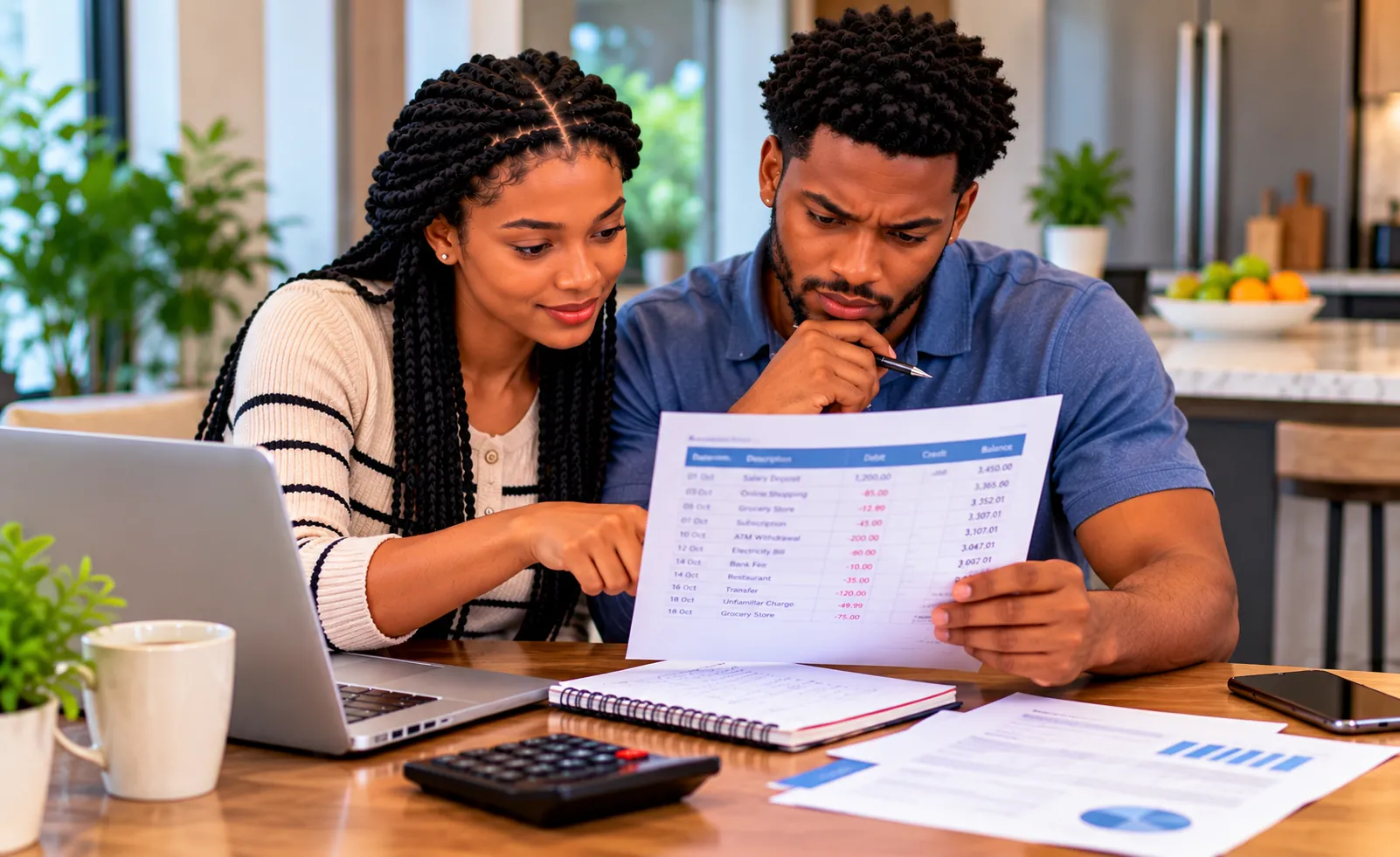
A Simple Example: Reviewing a Bank Statement
Imagine your statement shows the following transactions during one week:
- Opening balance: $600.
- Salary deposit: $1,000.
- Grocery payment: $85.
- Electricity bill: $60.
- Bank fee: $10.
- Unfamiliar online payment: $35.
Your balance after these transactions would be $1,410, assuming there are no other transactions or adjustments.
The $35 online payment is the item you need to investigate. First, check your receipts, emails and purchase history. If you still cannot identify it, contact your bank.
The $10 bank fee also deserves a check if you were not expecting it, but it may be a legitimate charge under your account terms. This example shows why reviewing individual transactions is more useful than checking your balance alone.
What to Do When You Find a Suspicious Transaction
If a transaction looks wrong, take these steps.
1. Record the details
Write down the transaction date, amount, description and reference number if available. Keep a copy of the relevant statement or transaction confirmation.
2. Contact your bank through an official channel
Use the bank's official app, website or phone number. Explain why you do not recognize the transaction and ask how to report it. Avoid using phone numbers or links sent in unexpected messages claiming to be from your bank.
3. Secure your account if necessary
If you suspect fraud, ask your bank whether you should freeze your card, block transactions, change your credentials or take other protective steps.
Never share your PIN, password or one-time verification code with someone who contacts you unexpectedly.
4. Report the transaction promptly
Follow your bank's dispute or fraud-reporting process. Explain what happened and provide the evidence requested.
Time limits and procedures vary by country, bank and payment method. Reporting quickly can help protect your rights and allow the bank to investigate.
5. Keep records of your complaint
Save the complaint reference, relevant messages and any instructions from the bank. Follow up if you do not receive an update within the timeframe provided.
If the issue is not resolved, you may be able to escalate it through the relevant financial ombudsman, regulator or consumer-protection body in your country.
How Often Should You Check Your Bank Statement?
You do not have to wait until the end of the month to review your account. A useful routine is to:
- Check recent transactions regularly through your bank's app or website.
- Review the full statement whenever it becomes available.
- Compare major payments with receipts and confirmations.
- Check recurring subscriptions and bank fees.
- Investigate unfamiliar activity as soon as you notice it.
You can also enable transaction alerts if your bank offers them. Alerts may help you notice activity sooner, although they do not replace reviewing your account.

How to Keep Your Bank Statements Safe
Bank statements can contain personal and financial information, so handle them carefully.
- Use a strong, unique password for online banking.
- Enable two-factor authentication where available.
- Avoid opening banking documents on shared devices you do not trust.
- Do not send statements to unknown people.
- Store printed statements in a secure place.
- Delete unnecessary digital copies safely.
- Be careful when sharing statements for loan, rental or other applications, and provide only what is required through a trusted channel.
If you download a statement, check where the file is saved, especially when using a shared phone or computer.
Frequently Asked Questions
What should I check first on a bank statement?
Start with the statement period, opening balance, closing balance, deposits, withdrawals and fees. Then review unfamiliar transactions and check whether the balance makes sense.
Why does my bank statement show a different balance from my app?
The statement and app may reflect different dates or transaction statuses. Pending payments, uncleared deposits, recent transactions and adjustments can cause differences. Ask your bank if you cannot explain the difference.
Can I dispute a bank charge I do not recognize?
Yes, you can ask your bank to investigate an unfamiliar charge. The bank will follow its dispute process to determine what happened. Report suspected unauthorized transactions promptly.
Are all unfamiliar transactions fraudulent?
No. Some payments appear under unfamiliar merchant names, and some fees or subscriptions may have been overlooked. Check your records first, but contact your bank immediately if you suspect unauthorized activity.
How long should I keep bank statements?
The appropriate period depends on your country's rules and your personal needs. Keep statements that may be needed for taxes, loans, business records or disputes, and check local requirements before disposing of them.
Can I read my bank statement on my phone?
Most banks that offer mobile or online banking allow customers to view transactions and, in many cases, download statements. The available features depend on your provider.
Final Thoughts
Your bank statement is more than a record of your balance. It helps you understand where your money comes from, where it goes and whether any transactions need attention.
Make a habit of checking your deposits, payments and fees. If something does not look right, investigate it promptly and contact your bank through an official channel.
A few minutes spent reviewing your account can help you catch mistakes, recognize suspicious activity and manage your money with greater confidence.
Disclaimer: This article provides general financial education and is not personalized financial or legal advice. Banking procedures, dispute deadlines and consumer protections vary by country and financial institution. Contact your bank for guidance on your specific circumstances.
Apply what you learned using a Tallyvance financial calculator.
Open Related Calculator →